Drag Drop Messy Bun Canva Frame Template
A Designer’s First Look: Playful, Relatable, and Ready for Real Life
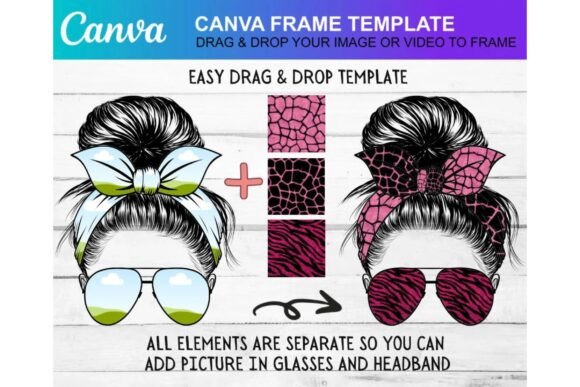
When I opened the Drag Drop Messy Bun Canva Frame Templa, my first thought wasn’t “cute” — it was “yes, this feels like a real mom’s morning.” The loose bun, the slightly askew sunglasses perched on top, the headband with quiet confidence — it’s not overly polished or cartoonish. It carries that warm, unfiltered charm so many handmade product buyers respond to instantly. As an embroidery designer who’s stitched hundreds of “mom life” motifs for tote bags, baby blankets, and boutique aprons, I appreciate how this frame avoids cliché. It’s got personality without demanding attention — exactly what works best when you’re embroidering onto soft cotton tea towels or lightweight sweatshirts.
Where This Frame Actually Shines (and Where It Needs Care)
I tested the Drag Drop Messy Bun Canva Frame Templa as part of a custom embroidered tote bag for a local nursery boutique — think organic cotton canvas, medium-weight stabilizer, and a 4x4 hoop. The layout translated beautifully: the circular frame gave natural breathing room around the messy bun motif, and the open negative space inside made it easy to add a name or date in a simple satin-stitched font. It also worked well scaled down on a baby onesie chest placement — the clean outer shape held up even at 3.2 inches wide.
That said, this isn’t a one-size-fits-all embroidery file. Because it’s delivered as a Canva template (not a native embroidery file), you’ll need to convert or trace it into a machine embroidery design before stitching. That means paying close attention to line weight, corner sharpness, and internal detail — especially around the sunglasses’ arms and the headband’s texture. On stretchy fabrics like jersey or thin knits, I’d recommend digitizing it with slightly wider satin borders and reducing fill stitch density to avoid puckering. And on dark fabric? Test contrast early: the frame’s subtle outline may vanish unless you use a light thread or add a white underlay.
Real-World Fit: From Sweatshirts to Holiday Gifts
This frame belongs on products where authenticity matters more than precision — think personalized sweatshirt embroidery for a mom’s birthday, embroidered patches for a small-batch clothing line, or pillow covers for a cozy nursery. It reads as handmade, not mass-produced, which builds trust with Etsy shoppers and craft fair buyers. I’ve seen similar motifs perform especially well in spring and summer listings: think “Mom Life” beach totes, sunhat patches, or linen kitchen towels with matching headband + bun graphics.
It’s less ideal for ultra-minimalist branding or high-end corporate gifting — the playful energy doesn’t align with those tones. And while it works fine on structured caps, avoid placing it near curved seams or bill edges unless you’ve tested the distortion in your embroidery software first. For baby embroidery, keep it centered on flat surfaces like bibs or blanket corners — skip bodysuits with tight necklines where stitch buildup could irritate sensitive skin.
Design Notes Every Embroidery Professional Should Check
- Always test on scrap fabric first — especially with textured weaves or blends, since the frame’s open shape relies on clean edge definition.
- Review stitch density before finalizing your digitized version — too much fill in the headband or sunglass lenses can cause stiffness or shadowing on lightweight fabrics.
- Confirm hoop size compatibility — the original Canva layout is flexible, but once digitized, make sure your final embroidery file fits comfortably within your most-used hoop (e.g., 4x4 or 5x7).
- Inspect small details at actual stitch scale — tiny gaps between the bun and frame edge may disappear or blur depending on your needle size and stabilizer choice.
- Test black-and-white mockups — does the frame still read clearly without color cues? This matters for grayscale printable mockups or monochrome product photos.
- Compare light vs. dark fabric backgrounds — the frame’s visual weight shifts dramatically; adjust thread color or underlay accordingly.
- Use appropriate stabilizer — tear-away works for stable cottons, but switch to cut-away for knits or anything that will be washed frequently.
- Verify licensing terms — since this is a digital download from Canva, confirm whether the license permits commercial embroidery use, resale of finished items, or inclusion in your own digital embroidery bundles.
Why This Frame Builds Better Handmade Products
What makes the Drag Drop Messy Bun Canva Frame Templa valuable isn’t just its aesthetic — it’s how it supports intentionality. When you choose this frame for a personalized gift, you’re signaling warmth, approachability, and lived-in joy. Customers notice that. A customer buying a “Messy Bun Mom Life” embroidered pillow cover isn’t just purchasing decor — she’s choosing recognition. That emotional resonance lifts perceived value, encourages repeat orders, and makes your small shop feel more human.
For Etsy sellers and craft business owners, pairing this frame with thoughtful typography and cohesive thread palettes creates strong brand consistency across product lines — say, matching tea towels, aprons, and baby blankets. It also works beautifully in digital product previews: drop it into a Canva mockup with soft shadows and natural lighting, and it reads as both professional and personal.
Final Thought: A Frame With Quiet Confidence
The Drag Drop Messy Bun Canva Frame Templa won’t shout. It doesn’t need to. Its strength lies in how naturally it fits into real embroidery projects — not as a standalone graphic, but as a thoughtful container for meaning. Whether you’re stitching a holiday gift for a new mom, building a seasonal collection for your handmade shop, or creating digital embroidery files for other designers, this frame gives you room to breathe, adapt, and connect. Just remember: it’s a starting point, not a finished embroidery file. Respect its rhythm, test its edges, and let it serve the story you’re stitching — not the other way around.